BMF Reports / BMF Capital is short SELLAS Life Sciences Group, Inc. (NASDAQ: SLS) as the company approaches a pivotal Phase 3 REGAL readout that we believe the market has dangerously overvalued. Our investigative short report examines the clinical evidence, statistical design, management history, financing activity, patent disclosures, and corporate record behind SELLAS’s nearly $3 billion valuation. How Questionable Credentials, Ten Selected Patients, and Broken Power Math Built Biotech’s Most Expensive Coin Flip details why we believe investors have mistaken a slow blinded event clock for proof of efficacy. Based on the weak historical-control foundation supporting GPS, questionable REGAL power assumptions, repeated dilution, failed 3D Medicines arbitration, and a valuation pricing in extraordinary clinical success, BMF Reports believes $SLS faces approximately 76% downside toward $3.50 per share if REGAL fails.
BMF Reports / BMF Capital is short NASDAQ: $SLS.
SELLAS Life Sciences Group, Inc. (NASDAQ: SLS) is being valued at roughly $3 billion on the belief that its Phase 3 REGAL trial has effectively been “de-risked” because deaths in the blinded study have accumulated more slowly than investors expected.
We think that conclusion is dangerously wrong.
BMF Reports conducted a forensic review of SELLAS’s clinical history, REGAL statistical design, SEC filings, financing history, licensing agreements, management biographies, patent disclosures, arbitration record, and the legacy corporate structure inherited from Galena Biopharma.
What we found is a biotech valuation built on an extraordinary amount of certainty that the underlying evidence simply does not support.
GPS entered Phase 3 largely on the back of an AML second-remission comparison involving just 10 selected vaccine-treated patients against 15 non-randomized historical controls. Disease-free survival was not statistically significant. Yet today the market is assigning billions of dollars of value to the assumption that this same program will produce a dramatic randomized survival benefit.
The red flags are substantial:
REGAL’s published power assumptions appear mathematically difficult to reconcile. SELLAS describes at least 90% statistical power at an assumed hazard ratio of 0.636 with only 80 deaths. Our reconstruction using conventional survival-analysis mathematics produces roughly 51% power, not 90%.
GPS’s foundational AML evidence involved only 10 treated patients versus 15 historical controls, not a randomized Phase 2 survival trial.
The highly promoted Greater China REGAL acceleration never materialized. SELLAS expected roughly 20 Chinese patients and low-teen-millions of dollars; by the end of 2025, no Chinese REGAL patients had enrolled.
SELLAS pursued approximately $13 million from 3D Medicines through arbitration and lost. The arbitrator dismissed SELLAS’s claims and allocated roughly $1 million of 3D Medicines’ legal fees and costs to SELLAS.
SELLAS entered the public markets through a combination with Galena Biopharma, whose prior corporate history included SEC stock-promotion charges and a DOJ settlement concerning alleged opioid kickbacks. The current SELLAS team was not implicated in those government resolutions, but the inherited corporate history is difficult to ignore.
Directors and officers collectively owned only about 1.3% of the company as of April 2026, while CEO compensation reached approximately $1.88 million in 2025.
Basic shares outstanding exploded approximately 122% in seventeen months, from roughly 90.8 million to 201.9 million, with another 35.3 million shares reserved for warrants, options, RSUs and equity plans.
SELLAS also has a $150 million ATM sitting available through TD Cowen.
The often-cited 2040 GPS patent date does not cleanly apply to the four-peptide product being tested in REGAL. The 2040 family relates to the seven-peptide GPS+ follow-on formulation, while portions of the four-peptide GPS patent estate begin expiring materially earlier.
SELLAS repeatedly presents CEO Angelos Stergiou as “M.D., Sc.D. h.c.” The Sc.D. is honorary. SEC filings describe his M.D. as coming from the “U.S. American Institute of Medicine,” while the World Directory of Medical Schools identifies it as the University of Seychelles American Institute of Medicine, a Seychelles-based school that later closed. We found no evidence the M.D. was fabricated; the issue is how the credentials are presented to investors.
None of this means GPS is guaranteed to fail.
It means the market is pricing SELLAS as though success is already known when REGAL remains blinded, randomized and binary.
At approximately $14.50 per share, SELLAS carried an illustrative equity value of roughly $2.93 billion, despite having no approved product, no product revenue, only 13 employees, third-party manufacturing dependence, and a second major asset—SLS009—whose encouraging results remain primarily open-label, non-randomized and historically controlled.
BMF Reports estimates a clean REGAL failure value of approximately $3.50 per share, implying roughly 76% downside from the valuation examined in our report. A materially worse-than-expected clinical outcome could drive the stock below that level.
Our thesis is simple:
SELLAS sold Wall Street a $3 billion survival story built on ten selected patients. REGAL is where that story finally meets a randomized control arm. We believe the control arm wins.
This public summary only scratches the surface.
The full BMF Reports dossier includes the complete REGAL statistical reconstruction, historical-control analysis, management and Galena timeline, 3D Medicines arbitration, dilution history, financing counterparties, patent breakdown, SLS009 valuation, and our full catalyst-driven downside model.
BMF $SLS UPDATE / 8/31/2026
$SLS — Important Clarification on the REGAL Power Debate
There is no public protocol disclosure proving that REGAL’s redacted powered hazard ratio is 0.484.
HR ~0.484 is the approximate value one can back-solve for ~90% power at 80 deaths using a conventional balanced Schoenfeld/log-rank calculation.
What is actually in the public record:
• SELLAS previously described HR 0.636 as the estimated final-analysis threshold for statistical significance, corresponding illustratively to approximately 12.6 months GPS vs. 8.0 months BAT.
• A SELLAS-funded, REGAL investigator-authored 2023 ASCO abstract explicitly stated ≥90% power under an assumed HR of 0.52, corresponding to approximately 15.4 months GPS vs. 8.0 months BAT.
• The operative public Version 5.0 REGAL protocol redacts the numerical powered alternative.
Therefore, the claim that “the hidden HR is definitely 0.484” is an inference — not a disclosed fact.
Exhibit 1 — REGAL public statistical-design disclosures
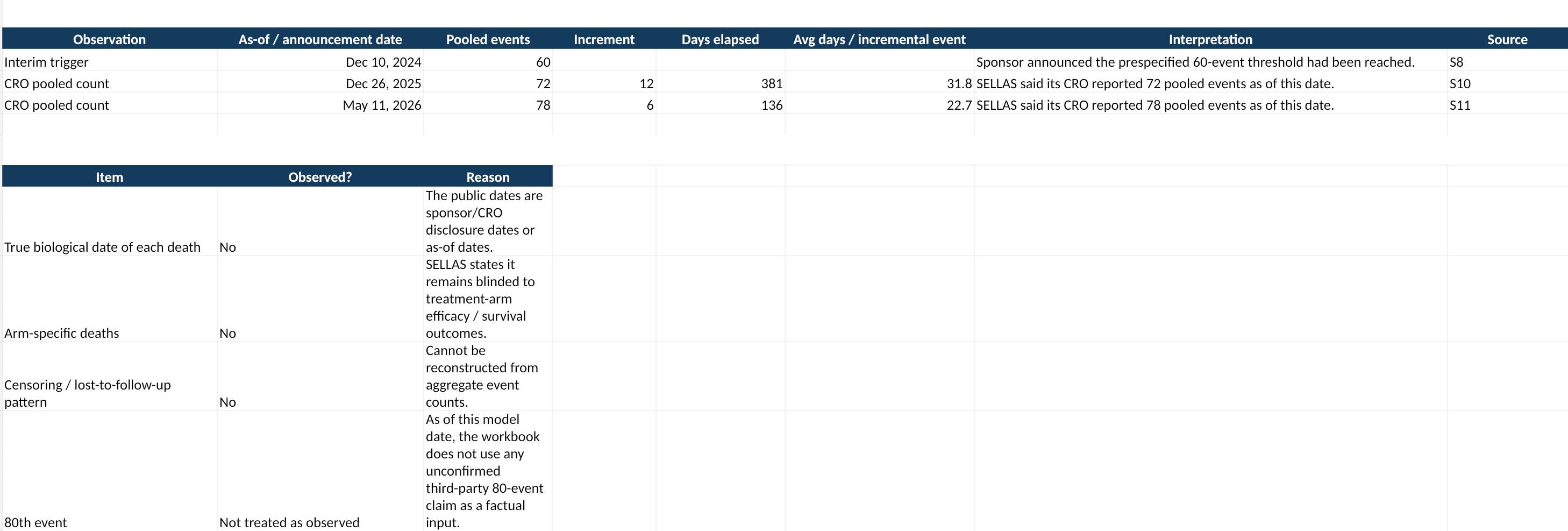
Exhibit 2 — BMF Monte Carlo sensitivity analysis

Exhibit 3 — Documented REGAL event trajectory

Exhibit 4 — Historical GPS survival context

Important modeling note: The BMF Monte Carlo analysis is a blinded sensitivity analysis, not an estimate of the true treatment-arm hazard ratio. Multiple materially different arm-level survival scenarios can produce similar pooled event trajectories.
We are also correcting one distinction in our prior framing: HR 0.636 should not necessarily be treated as the powered alternative.
The more relevant question is how the publicly disclosed HR 0.52 reconciles with ≥90% power at only 80 events under REGAL’s actual stratified, group-sequential statistical design.
Separately, REGAL’s prolonged blinded event timeline still does not tell investors which randomized arm is driving the observed survival.
Slow pooled deaths ≠ HR 0.48.
Slow pooled deaths ≠ HR 0.52.
Slow pooled deaths ≠ proof GPS works.
Until REGAL is unblinded, outside investors do not know the treatment-arm hazard ratio, confidence interval, p-value, or median overall survival by arm.
0.484 is inferred. 0.52 is disclosed. The blind is still the blind.
Primary Sources
CTIS — Public REGAL Version 5.0 trial documents
ASCO/JCO — 2023 REGAL trial-in-progress abstract
SEC — SELLAS November 2022 REGAL design disclosure